
Switching to value-based pricing is more than a new billing model, it’s a shift that empowers payroll providers to maximize growth, enhance client satisfaction, and elevate their role as strategic advisors. In our recent webinar, led by Dustin Meneses, Director of Sales & CS, we explored this transition, providing an actionable roadmap to unlock the full potential of payroll services.
If you missed it, check out part 1 of our value-based pricing tips for bookkeeper’s across Canada.
Value-Based Pricing Part 2 Full Webinar Recording
Or, download the PDF of the slides featured in this webinar below:
Setting up fake worker failed: "Cannot read properties of undefined (reading 'WorkerMessageHandler')".Loading...
What Is Value-Based Pricing?
Value-based pricing aligns with the client’s perceived value of outcomes, not just time spent. Unlike traditional pricing models that rely on tasks or hours, this approach centers on the tangible benefits clients receive, such as reduced compliance risks and improved efficiency. Dustin captured this shift:
“Focus on the outcomes, not the hours. Sure, it’s good to know how many hours it typically takes, but focus on the outcomes because it’s going to give your clients greater satisfaction and trust.”
Why It Works:
Trust and Transparency: Clients understand the direct impact of your services, building trust.
Competitive Advantage: Distinguish your firm by positioning payroll as a strategic asset.
Higher Client Satisfaction: Payroll errors erode employee trust, with 90% of employees viewing accurate, timely payroll as essential.
The Downside of Traditional Payroll Pricing
Traditional pricing models can hold firms back. Dustin pointed out that hourly or per-payroll fees can:
Limit Revenue: Tying income to payroll frequency caps growth potential.
Undervalue Expertise: Clients may see payroll as a “checkbox” rather than a nuanced service.
Restrict Client Value: Over half of Canadian businesses believe payroll processes need improvement, yet many don’t see the strategic value payroll can offer.
“Traditional payroll models keep you tied to frequency, not value. Value-based pricing, though—it’s transformative. It helps clients see payroll as something that drives their business forward, not just a checkbox.”
Positioning Payroll as a Strategic Service
Our survey revealed that 83% of employees want payroll self-service, underscoring the importance of automation and real-time access. Dustin urged firms to communicate how payroll’s impact extends beyond compliance—supporting everything from employee engagement to operational efficiency.
Top Benefits to Communicate:
Cost Savings: Automation reduces costly errors and saves time.
Efficiency: Streamlined payroll drives better decision-making.
Strategic Insights: Payroll data offers a valuable perspective on business performance.
“Payroll is more than compliance—it’s an engine for client growth and engagement. When clients see the full value, it strengthens the relationship and elevates your role.”
Making the Shift: Practical Steps to Implement Value-Based Pricing
Dustin shared a step-by-step approach to help firms transition:
Bundle Services: Combine payroll with advisory offerings, adding layers of value.
Offer Compliance Guarantees: Compliance support builds trust and reduces risks.
Automate and Integrate: Technology is essential to improve efficiency and minimize errors.
“It’s about bundling your expertise and using automation to reduce errors, build trust, and deliver insights. Clients will invest in outcomes that matter to them,” Dustin advised.
Service Tiers: Matching Services to Client Needs
Creating service tiers makes it easy to meet diverse client needs. Dustin highlighted three options as a practical framework:
Basic: Payroll processing and compliance support.
Standard: Adds employee self-service and periodic advisory insights.
Premium: Full advisory and monthly planning, providing a strategic roadmap.
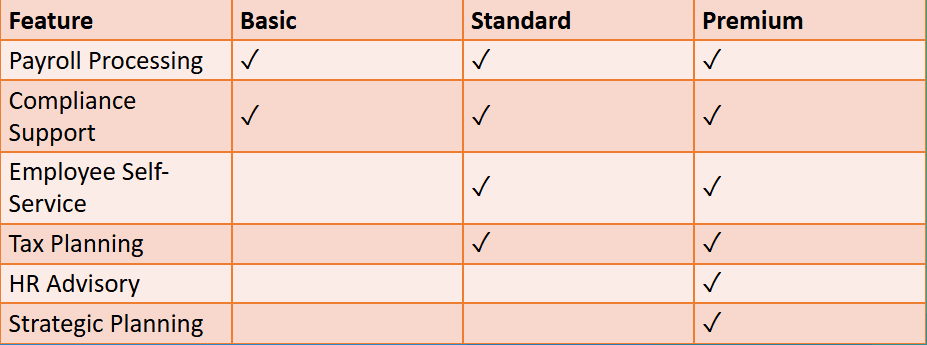
This structure lets clients choose the right fit for their needs, with the option to scale as they grow.
“It’s about showing the impact you can have on their business and positioning payroll as more than just a compliance tool.”
Real-World Success Story: Maple Grove Café
One example shared was Maple Grove Café, a Toronto-based small business with manual payroll issues. After evaluating the tiers:
Basic ($200/month): Covered payroll basics.
Standard ($350/month): Added employee self-service and quarterly insights.
Premium ($500/month): Provided HR advisory and monthly planning.
Maple Grove saw value in the Standard tier, addressing their needs for insights and engagement without full advisory costs. Value-based pricing empowered this small business to optimize payroll in a way that suited their unique needs.
Empathy and Value Communication: Dustin’s Insights
Dustin emphasized that empathy is critical to communicating the value of payroll services. He suggested using “empathy builders,” exercises to understand client pain points and demonstrate how value-based services meet their needs. This approach shifts the focus from price to the tangible benefits clients gain.
Overcoming Common Objections: Clients may worry about costs, but Dustin encouraged firms to:
Highlight ROI: Show time savings, compliance support, and risk reduction.
Ask Impactful Questions: For example, “What would avoiding a CRA fine mean for your business?”
“Ask the questions that make clients think about their needs and connect those needs to the value you provide … It’s about helping them see why you’re the best choice.”
Tools & Technology: Amplifying Value Delivery
Technology amplifies your firm’s value, allowing for error reduction, self-service, and real-time reporting. Dustin recommended automated payroll solutions that cut down on manual labor and streamline processes, freeing firms to focus on strategic advice. With platforms like PaymentEvolution, payroll can be completed in minutes, opening up opportunities for added revenue.
Scaling Your Firm with Value-Based Pricing
Dustin highlighted several ways to scale using value-based pricing:
Tiered Offerings: Address diverse client needs with scalable service tiers.
Advisory Services: Provide valuable insights that go beyond payroll.
Client Retention: Build lasting relationships by consistently delivering high value.
Leveraging Compliance as a Competitive Advantage Compliance support reduces client risk and builds loyalty. Dustin shared how Ontario saw nearly 12,000 ESA investigations in 2022-2023, a figure that underscores the value of compliance services. Including these in premium packages can offer clients peace of mind, strengthening your position as a trusted advisor.
Your Next Steps to Value-Based Pricing Success
Transitioning to value-based pricing isn’t an overnight change. Dustin reminded attendees of the importance of team training to ensure that everyone can articulate the firm’s value consistently. The final action items he shared were:
Evaluate Current Pricing: Identify opportunities to add value.
Develop Service Tiers: Build packages that align with different client needs.
Train Your Team: Make sure everyone communicates value effectively.
“This isn’t just about you deciding to make the change, It’s about bringing your team along so that everyone knows how to communicate value in a way that resonates with clients.”
Recommended Reading: Dustin suggested the book Breaking the Time Barrier by Mike McDermott for further insight into value-based billing. As he explained, “It’s a quick, impactful read that can provide a fresh perspective on pricing services for value.”
Moving Forward: Transforming Payroll from Compliance to Strategy
By adopting value-based pricing, payroll providers can build stronger, longer-lasting client relationships, elevate their role as strategic advisors, and drive sustainable growth. Start small—evaluate your pricing, develop clear tiers, and educate your team. When you focus on outcomes, clients will see payroll as an investment in their success, not just a regulatory requirement.
Further Resources
Understanding Value-Based Pricing: For readers interested in a deeper dive into value-based pricing, consider Xero’s guide on implementing the strategy.
Recommended Reading – Breaking the Time Barrier: Dustin mentioned this eBook from Freshbooks towards the end of the presentation – Breaking the Time Barrier.
Switching to value-based pricing is more than a new billing model, it’s a shift that empowers payroll providers to maximize growth, enhance client satisfaction, and elevate their role as strategic advisors. In our recent webinar, led by Dustin Meneses, Director of Sales & CS, we explored this transition, providing an actionable roadmap to unlock the full potential of payroll services.
If you missed it, check out part 1 of our value-based pricing tips for bookkeeper’s across Canada.
Value-Based Pricing Part 2 Full Webinar Recording
Or, download the PDF of the slides featured in this webinar below:
Setting up fake worker failed: "Cannot read properties of undefined (reading 'WorkerMessageHandler')".Loading...
What Is Value-Based Pricing?
Value-based pricing aligns with the client’s perceived value of outcomes, not just time spent. Unlike traditional pricing models that rely on tasks or hours, this approach centers on the tangible benefits clients receive, such as reduced compliance risks and improved efficiency. Dustin captured this shift:
“Focus on the outcomes, not the hours. Sure, it’s good to know how many hours it typically takes, but focus on the outcomes because it’s going to give your clients greater satisfaction and trust.”
Why It Works:
Trust and Transparency: Clients understand the direct impact of your services, building trust.
Competitive Advantage: Distinguish your firm by positioning payroll as a strategic asset.
Higher Client Satisfaction: Payroll errors erode employee trust, with 90% of employees viewing accurate, timely payroll as essential.
The Downside of Traditional Payroll Pricing
Traditional pricing models can hold firms back. Dustin pointed out that hourly or per-payroll fees can:
Limit Revenue: Tying income to payroll frequency caps growth potential.
Undervalue Expertise: Clients may see payroll as a “checkbox” rather than a nuanced service.
Restrict Client Value: Over half of Canadian businesses believe payroll processes need improvement, yet many don’t see the strategic value payroll can offer.
“Traditional payroll models keep you tied to frequency, not value. Value-based pricing, though—it’s transformative. It helps clients see payroll as something that drives their business forward, not just a checkbox.”
Positioning Payroll as a Strategic Service
Our survey revealed that 83% of employees want payroll self-service, underscoring the importance of automation and real-time access. Dustin urged firms to communicate how payroll’s impact extends beyond compliance—supporting everything from employee engagement to operational efficiency.
Top Benefits to Communicate:
Cost Savings: Automation reduces costly errors and saves time.
Efficiency: Streamlined payroll drives better decision-making.
Strategic Insights: Payroll data offers a valuable perspective on business performance.
“Payroll is more than compliance—it’s an engine for client growth and engagement. When clients see the full value, it strengthens the relationship and elevates your role.”
Making the Shift: Practical Steps to Implement Value-Based Pricing
Dustin shared a step-by-step approach to help firms transition:
Bundle Services: Combine payroll with advisory offerings, adding layers of value.
Offer Compliance Guarantees: Compliance support builds trust and reduces risks.
Automate and Integrate: Technology is essential to improve efficiency and minimize errors.
“It’s about bundling your expertise and using automation to reduce errors, build trust, and deliver insights. Clients will invest in outcomes that matter to them,” Dustin advised.
Service Tiers: Matching Services to Client Needs
Creating service tiers makes it easy to meet diverse client needs. Dustin highlighted three options as a practical framework:
Basic: Payroll processing and compliance support.
Standard: Adds employee self-service and periodic advisory insights.
Premium: Full advisory and monthly planning, providing a strategic roadmap.
This structure lets clients choose the right fit for their needs, with the option to scale as they grow.
“It’s about showing the impact you can have on their business and positioning payroll as more than just a compliance tool.”
Real-World Success Story: Maple Grove Café
One example shared was Maple Grove Café, a Toronto-based small business with manual payroll issues. After evaluating the tiers:
Basic ($200/month): Covered payroll basics.
Standard ($350/month): Added employee self-service and quarterly insights.
Premium ($500/month): Provided HR advisory and monthly planning.
Maple Grove saw value in the Standard tier, addressing their needs for insights and engagement without full advisory costs. Value-based pricing empowered this small business to optimize payroll in a way that suited their unique needs.
Empathy and Value Communication: Dustin’s Insights
Dustin emphasized that empathy is critical to communicating the value of payroll services. He suggested using “empathy builders,” exercises to understand client pain points and demonstrate how value-based services meet their needs. This approach shifts the focus from price to the tangible benefits clients gain.
Overcoming Common Objections: Clients may worry about costs, but Dustin encouraged firms to:
Highlight ROI: Show time savings, compliance support, and risk reduction.
Ask Impactful Questions: For example, “What would avoiding a CRA fine mean for your business?”
“Ask the questions that make clients think about their needs and connect those needs to the value you provide … It’s about helping them see why you’re the best choice.”
Tools & Technology: Amplifying Value Delivery
Technology amplifies your firm’s value, allowing for error reduction, self-service, and real-time reporting. Dustin recommended automated payroll solutions that cut down on manual labor and streamline processes, freeing firms to focus on strategic advice. With platforms like PaymentEvolution, payroll can be completed in minutes, opening up opportunities for added revenue.
Scaling Your Firm with Value-Based Pricing
Dustin highlighted several ways to scale using value-based pricing:
Tiered Offerings: Address diverse client needs with scalable service tiers.
Advisory Services: Provide valuable insights that go beyond payroll.
Client Retention: Build lasting relationships by consistently delivering high value.
Leveraging Compliance as a Competitive Advantage Compliance support reduces client risk and builds loyalty. Dustin shared how Ontario saw nearly 12,000 ESA investigations in 2022-2023, a figure that underscores the value of compliance services. Including these in premium packages can offer clients peace of mind, strengthening your position as a trusted advisor.
Your Next Steps to Value-Based Pricing Success
Transitioning to value-based pricing isn’t an overnight change. Dustin reminded attendees of the importance of team training to ensure that everyone can articulate the firm’s value consistently. The final action items he shared were:
Evaluate Current Pricing: Identify opportunities to add value.
Develop Service Tiers: Build packages that align with different client needs.
Train Your Team: Make sure everyone communicates value effectively.
“This isn’t just about you deciding to make the change, It’s about bringing your team along so that everyone knows how to communicate value in a way that resonates with clients.”
Recommended Reading: Dustin suggested the book Breaking the Time Barrier by Mike McDermott for further insight into value-based billing. As he explained, “It’s a quick, impactful read that can provide a fresh perspective on pricing services for value.”
Moving Forward: Transforming Payroll from Compliance to Strategy
By adopting value-based pricing, payroll providers can build stronger, longer-lasting client relationships, elevate their role as strategic advisors, and drive sustainable growth. Start small—evaluate your pricing, develop clear tiers, and educate your team. When you focus on outcomes, clients will see payroll as an investment in their success, not just a regulatory requirement.
Further Resources
Understanding Value-Based Pricing: For readers interested in a deeper dive into value-based pricing, consider Xero’s guide on implementing the strategy.
Recommended Reading – Breaking the Time Barrier: Dustin mentioned this eBook from Freshbooks towards the end of the presentation – Breaking the Time Barrier.
Get a 15-day free trial today,
no credit card required.
See why 20,000+ businesses trust PayEvo to handle their payroll, benefits management, and HR solutions every day.

No spam. Opt-out or cancel anytime.
Get a 15-day free trial today,
no credit card required.
See why 20,000+ businesses trust PayEvo to handle their payroll, benefits management, and HR solutions every day.
No spam. Opt-out or cancel anytime.