
Every November, the same cycle begins across Canada.
Business owners tense up. HR pulls out spreadsheets. Payroll braces for impact. Cue the seasonal payroll challenges.
Holiday scheduling, seasonal hires, overtime calculations, vacation banks, statutory holidays, ROEs, reconciliations, and T4/T4A/RL-1 prep collide like a slow-motion train wreck, and we collectively shrug and call it “the season.”
But here’s the truth most Canadian businesses never question:
Year-end payroll panic isn’t a natural disaster. We built it. Not intentionally, just slowly, with disconnected tools, manual tracking, late approvals, duplicated data entry, missing hours, and hoping everything reconciles in time.
And the worst part? We’ve accepted it as the norm.
Let’s challenge that.
The Hidden Cost of Normalizing Payroll Chaos
When payroll breaks, even quietly, businesses bleed in 4 ways:
1. Time Loss (You don’t get back)
Studies show North American companies spend 10–25+ hours per month on manual payroll admin tasks alone, and year-end can double or triple that workload. That’s time stolen from customers, strategy, and actually running the business.
2. Error Rates (That quietly cost $$$)
Manual payroll data entry has an average 1–8% error rate. Even a small payroll mistake, wrong hours, missed overtime, stat pay errors, adds up fast when applied across teams.
3. Employee Trust (That takes months to rebuild)
Nothing erodes confidence faster than paycheck mistakes, especially during the holidays.
Payroll inaccuracies can impact retention, especially in hourly and shift-based workforces.
4. Compliance Risk (That gets real in Q4 & Q1)
T4s, ROEs, taxable benefits, vacations, statutory pay, and provincial nuances (looking at you, Quebec) don’t just need to be done, they need to be done right.
Season Payroll Pressure Isn’t The Problem
Many businesses assume that year-end payroll stress is a seasonal inevitability, a temporary rush caused by holidays, deadlines, and administrative overload. But this view oversimplifies the issue.
In reality, the pressure intensifies in Q4 not because payroll suddenly becomes harder, but because the cracks in outdated systems, manual workstreams, and disconnected tools become impossible to ignore. The season doesn’t cause payroll chaos, it exposes it.
Think about the key stressors that spike between November and January:
Unexpected employee absences and holiday scheduling gaps
Increased payroll frequency or special payouts (bonuses, holiday pay, overtime)
Tighter deadlines due to statutory holiday bank closures
Year-end compliance requirements (T4 prep, reconciliation, record reviewing)
An urgent push for faster approvals in a shorter work week cycle
Higher employee expectations for pay visibility and accuracy
None of these challenges exist solely in winter. They exist year-round, but the holiday season amplifies them.
And businesses that rely on manual processes, disconnected platforms, or outdated tools quickly discover that their workflow lacks three critical safeguards:
1. Speed: the ability to process payroll changes instantly, even last-minute
2. Accuracy: confidence that overtime, hours, and deductions are tracked without errors
3. Centralization: a single source of truth for employee data, time tracking, payroll, and tax information
When these fundamentals are missing, every new seasonal variable adds friction: spreadsheets multiply, approvals stall, data gets re-entered across tools, and compliance becomes a scramble instead of a process.
The result? Burned-out admins. Unhappy employees. And avoidable errors.
The truth is this: the holiday season doesn’t create payroll pressure, it removes the luxury of hiding inefficient systems.
Businesses then face a choice:
Patch the problem temporarily and brace for repeat stress next quarter, or
Upgrade the foundation so payroll works with the business, not against it.
Companies that thrive through year-end aren’t necessarily doing less, they’re doing it smarter.
They use tools that:
Track hours in real time instead of manual timesheets
Consolidate payroll, employee self-serve, and tax filing in one platform
Remove repetitive admin with automation, not overtime hours
Provide transparency that cuts back on internal approval bottlenecks
Offer compliance safeguards baked into the process, not added as an afterthought
Seasonal payroll pressure is not a winter problem to solve, it’s a system problem to fix.
And the organizations that choose to fix it now don’t just survive December and January, they enter the new year operating a step ahead, while competitors spend Q1 recovering from mistakes made in Q4.
The Businesses That Break the Cycle Do These 3 Things Well
Organizations that navigate year-end payroll smoothly aren’t simply getting “lucky” or working harder, they’ve built systems that eliminate chaos before it starts. When we analyze businesses that avoid seasonal payroll strain, three strategic patterns emerge:
1. They centralize core workforce data
They eliminate silos by bringing time tracking, payroll, and employee information into a single connected environment. No double entry. No mismatched spreadsheets. No reconciling hours from one tool while calculating pay in another.
2. They automate the repetitive, not just the complex
Instead of manually approving hours, exporting reports, calculating overtime, and chasing forms, they automate the small actions that compound into large administrative drain. This protects bandwidth when the stakes get higher, like holiday scheduling, compliance deadlines, and employee questions about pay accuracy.
3. They make compliance part of the workflow, not a year-end scramble
From digitized records to built-in tax filing support, they ensure the business stays audit-ready without last-minute panic. End-of-year tasks become a continuation of a process, not a disruption to one.
The result? A payroll operation that scales with the business, not against it. And more importantly: a team that doesn’t burn out when the calendar gets demanding.
The Emotional Cost We Rarely Talk About
Payroll stress is usually measured in overtime hours, admin backlog, or processing errors, but the most expensive costs are rarely recorded in metrics.
There’s a human impact to fragmented payroll systems that no KPI dashboard can quantify:
The anxiety of finance and HR teams triple-checking data at midnight
The frustration of employees questioning missing hours or incorrect pay
The steady erosion of trust when payday becomes unpredictable
The mental load of juggling unconnected tools, passwords, files, downloads, and approvals
The silent ripple effect of payroll errors on morale, retention, and employer credibility
For small and mid-sized businesses, payroll isn’t a department, it’s often one person balancing compliance, employee support, and operations simultaneously. When systems fail, the failure isn’t abstract, it lands on someone’s desk, someone’s weekend, someone’s peace of mind.
Modern payroll isn’t just about accuracy. It’s about psychological bandwidth. Confidence. And creating a work environment where payday is a non-event, because it just works.
The Switch That Eliminates Seasonal Payroll Challenges
Most payroll transformations aren’t triggered by one massive problem. They happen when a business reaches a tipping point: the moment the manual workaround starts costing more than the problem it was meant to solve.
Companies that make the switch successfully do so because they stop asking:
“How do we survive this season?”
And start asking:
“How do we stop running payroll like it’s always an emergency?”
That mindset shift changes the criteria for success. The goal becomes:
Fewer tools, not more
One source of truth, not five versions of it
Automation by design, not by afterthought
Compliance built-in, not patched on
Employee autonomy, not admin bottlenecks
When businesses move from reactive payroll to engineered payroll, the impact is immediate:
Hours formerly spent on data entry become hours spent on strategy
Employee pay questions drop because visibility increases
Compliance becomes automated, not procedural
Payday becomes predictable, even in peak seasonal cycles
The switch isn’t just operational, it’s transformational.
It Starts With Time Done Right
Payroll errors rarely begin in payroll, they begin in time tracking.
Late timesheets, manual approvals, misplaced spreadsheets, unclear overtime, incorrect break entries, and device limitations all create data friction before payroll ever begins. When time data is inaccurate, payroll becomes damage control instead of process execution.
The businesses that eliminate this bottleneck do one critical thing: they capture hours at the source, in real time, in one system.
With Chequer Time Tracking, employees can clock in and out from any device, no apps to stitch together, no files to chase. And for teams who don’t operate remotely or rely on personal phones, Chequer Onsite turns any tablet into a shared punch clock, making time capture simple, fast, and standardized across locations.
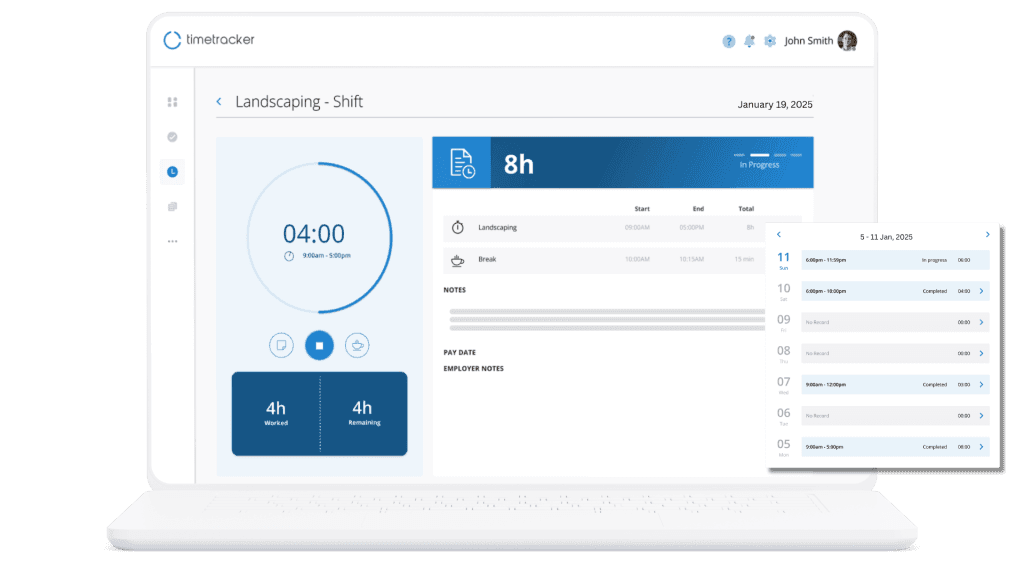
The real value isn’t just convenience, it’s confidence.
Hours flow straight into payroll, no manual entry, no errors
Faster approvals, zero bottlenecks
One unified system, zero extra tools or costs
Fewer corrections, fewer questions, more confidence
When time tracking works, payroll stops being a cleanup job and becomes a calculated outcome.
Then Payroll Stops Being a Task & Becomes A System
Once time is tracked properly, payroll processing should feel like connecting the dots, not solving the puzzle.
Modern payroll is less about calculating pay and more about orchestrating the flow of data: hours, deductions, compliance, records, approvals, and employee access, all moving in sync.
The shift businesses experience at this stage is massive:
Fewer manual corrections because time data is already payroll-ready
Faster pay runs because approvals and integrations flow naturally
Built-in compliance (ROEs, T4s, submissions) instead of year-end scrambles
Employee self-serve that reduces questions and admin cycles
Instead of wrestling with payroll, successful teams move into managing by exception reviewing, approving, and optimizing rather than rebuilding data line by line every cycle.
This is the inflection point: payroll stops being the crisis and becomes the infrastructure.
And It Ends Where Most Systems Fall Short: Supporting Employees At Tax Time
Most payroll platforms end at payday.
But the employee experience continues, especially in Q1 when tax season hits and questions spike, confusion peaks, and your team becomes informal tech support for missing forms, filing guidance, and document requests.
This is where PaymentEvolution closes the loop. With free employee tax filing (powered by CloudTax), employees can securely file their taxes in the same ecosystem where their payroll lives for no cost to them or you.
This doesn’t just help employees file faster, it strengthens the employer-employee relationship. Because when payroll, pay stubs, year-end documents, and tax filing exist in one continuous system, businesses deliver something rare in today’s work environment:
Convenience without disconnection. Support without complexity. Clarity without chaos.
The New Standard For Canadian Payroll Isn’t Survival, It’s Sync
For decades, Canadian businesses have treated payroll like a necessary administrative burden, something to complete, endure, and check off. The bar has historically been set at getting through it without mistakes.
But the standard has changed. Today’s payroll expectations look like this:
Old Standard | New Standard |
|---|---|
Process payroll on time | Sync time, pay, and tax seamlessly |
Avoid errors | Prevent errors before they happen |
Manage compliance manually | Automate compliance continuously |
Answer employee questions | Empower employees with self-serve tools |
Use multiple platforms | Run everything in one connected system |
Payroll is no longer a back-office function that businesses tolerate, it’s a foundation they compete with. And the companies that adopt this mindset first gain advantages that go beyond efficiency:
Employees trust them more
Admin teams stay longer
Operations become more scalable
Growth doesn’t equal chaos
And year-end pressure becomes… manageable, even predictable
Because the future of payroll isn’t about doing more. It’s about syncing more.
Want to learn more about how PaymentEvolution can help you solve your payroll chaos? Visit our website.
Every November, the same cycle begins across Canada.
Business owners tense up. HR pulls out spreadsheets. Payroll braces for impact. Cue the seasonal payroll challenges.
Holiday scheduling, seasonal hires, overtime calculations, vacation banks, statutory holidays, ROEs, reconciliations, and T4/T4A/RL-1 prep collide like a slow-motion train wreck, and we collectively shrug and call it “the season.”
But here’s the truth most Canadian businesses never question:
Year-end payroll panic isn’t a natural disaster. We built it. Not intentionally, just slowly, with disconnected tools, manual tracking, late approvals, duplicated data entry, missing hours, and hoping everything reconciles in time.
And the worst part? We’ve accepted it as the norm.
Let’s challenge that.
The Hidden Cost of Normalizing Payroll Chaos
When payroll breaks, even quietly, businesses bleed in 4 ways:
1. Time Loss (You don’t get back)
Studies show North American companies spend 10–25+ hours per month on manual payroll admin tasks alone, and year-end can double or triple that workload. That’s time stolen from customers, strategy, and actually running the business.
2. Error Rates (That quietly cost $$$)
Manual payroll data entry has an average 1–8% error rate. Even a small payroll mistake, wrong hours, missed overtime, stat pay errors, adds up fast when applied across teams.
3. Employee Trust (That takes months to rebuild)
Nothing erodes confidence faster than paycheck mistakes, especially during the holidays.
Payroll inaccuracies can impact retention, especially in hourly and shift-based workforces.
4. Compliance Risk (That gets real in Q4 & Q1)
T4s, ROEs, taxable benefits, vacations, statutory pay, and provincial nuances (looking at you, Quebec) don’t just need to be done, they need to be done right.
Season Payroll Pressure Isn’t The Problem
Many businesses assume that year-end payroll stress is a seasonal inevitability, a temporary rush caused by holidays, deadlines, and administrative overload. But this view oversimplifies the issue.
In reality, the pressure intensifies in Q4 not because payroll suddenly becomes harder, but because the cracks in outdated systems, manual workstreams, and disconnected tools become impossible to ignore. The season doesn’t cause payroll chaos, it exposes it.
Think about the key stressors that spike between November and January:
Unexpected employee absences and holiday scheduling gaps
Increased payroll frequency or special payouts (bonuses, holiday pay, overtime)
Tighter deadlines due to statutory holiday bank closures
Year-end compliance requirements (T4 prep, reconciliation, record reviewing)
An urgent push for faster approvals in a shorter work week cycle
Higher employee expectations for pay visibility and accuracy
None of these challenges exist solely in winter. They exist year-round, but the holiday season amplifies them.
And businesses that rely on manual processes, disconnected platforms, or outdated tools quickly discover that their workflow lacks three critical safeguards:
1. Speed: the ability to process payroll changes instantly, even last-minute
2. Accuracy: confidence that overtime, hours, and deductions are tracked without errors
3. Centralization: a single source of truth for employee data, time tracking, payroll, and tax information
When these fundamentals are missing, every new seasonal variable adds friction: spreadsheets multiply, approvals stall, data gets re-entered across tools, and compliance becomes a scramble instead of a process.
The result? Burned-out admins. Unhappy employees. And avoidable errors.
The truth is this: the holiday season doesn’t create payroll pressure, it removes the luxury of hiding inefficient systems.
Businesses then face a choice:
Patch the problem temporarily and brace for repeat stress next quarter, or
Upgrade the foundation so payroll works with the business, not against it.
Companies that thrive through year-end aren’t necessarily doing less, they’re doing it smarter.
They use tools that:
Track hours in real time instead of manual timesheets
Consolidate payroll, employee self-serve, and tax filing in one platform
Remove repetitive admin with automation, not overtime hours
Provide transparency that cuts back on internal approval bottlenecks
Offer compliance safeguards baked into the process, not added as an afterthought
Seasonal payroll pressure is not a winter problem to solve, it’s a system problem to fix.
And the organizations that choose to fix it now don’t just survive December and January, they enter the new year operating a step ahead, while competitors spend Q1 recovering from mistakes made in Q4.
The Businesses That Break the Cycle Do These 3 Things Well
Organizations that navigate year-end payroll smoothly aren’t simply getting “lucky” or working harder, they’ve built systems that eliminate chaos before it starts. When we analyze businesses that avoid seasonal payroll strain, three strategic patterns emerge:
1. They centralize core workforce data
They eliminate silos by bringing time tracking, payroll, and employee information into a single connected environment. No double entry. No mismatched spreadsheets. No reconciling hours from one tool while calculating pay in another.
2. They automate the repetitive, not just the complex
Instead of manually approving hours, exporting reports, calculating overtime, and chasing forms, they automate the small actions that compound into large administrative drain. This protects bandwidth when the stakes get higher, like holiday scheduling, compliance deadlines, and employee questions about pay accuracy.
3. They make compliance part of the workflow, not a year-end scramble
From digitized records to built-in tax filing support, they ensure the business stays audit-ready without last-minute panic. End-of-year tasks become a continuation of a process, not a disruption to one.
The result? A payroll operation that scales with the business, not against it. And more importantly: a team that doesn’t burn out when the calendar gets demanding.
The Emotional Cost We Rarely Talk About
Payroll stress is usually measured in overtime hours, admin backlog, or processing errors, but the most expensive costs are rarely recorded in metrics.
There’s a human impact to fragmented payroll systems that no KPI dashboard can quantify:
The anxiety of finance and HR teams triple-checking data at midnight
The frustration of employees questioning missing hours or incorrect pay
The steady erosion of trust when payday becomes unpredictable
The mental load of juggling unconnected tools, passwords, files, downloads, and approvals
The silent ripple effect of payroll errors on morale, retention, and employer credibility
For small and mid-sized businesses, payroll isn’t a department, it’s often one person balancing compliance, employee support, and operations simultaneously. When systems fail, the failure isn’t abstract, it lands on someone’s desk, someone’s weekend, someone’s peace of mind.
Modern payroll isn’t just about accuracy. It’s about psychological bandwidth. Confidence. And creating a work environment where payday is a non-event, because it just works.
The Switch That Eliminates Seasonal Payroll Challenges
Most payroll transformations aren’t triggered by one massive problem. They happen when a business reaches a tipping point: the moment the manual workaround starts costing more than the problem it was meant to solve.
Companies that make the switch successfully do so because they stop asking:
“How do we survive this season?”
And start asking:
“How do we stop running payroll like it’s always an emergency?”
That mindset shift changes the criteria for success. The goal becomes:
Fewer tools, not more
One source of truth, not five versions of it
Automation by design, not by afterthought
Compliance built-in, not patched on
Employee autonomy, not admin bottlenecks
When businesses move from reactive payroll to engineered payroll, the impact is immediate:
Hours formerly spent on data entry become hours spent on strategy
Employee pay questions drop because visibility increases
Compliance becomes automated, not procedural
Payday becomes predictable, even in peak seasonal cycles
The switch isn’t just operational, it’s transformational.
It Starts With Time Done Right
Payroll errors rarely begin in payroll, they begin in time tracking.
Late timesheets, manual approvals, misplaced spreadsheets, unclear overtime, incorrect break entries, and device limitations all create data friction before payroll ever begins. When time data is inaccurate, payroll becomes damage control instead of process execution.
The businesses that eliminate this bottleneck do one critical thing: they capture hours at the source, in real time, in one system.
With Chequer Time Tracking, employees can clock in and out from any device, no apps to stitch together, no files to chase. And for teams who don’t operate remotely or rely on personal phones, Chequer Onsite turns any tablet into a shared punch clock, making time capture simple, fast, and standardized across locations.
The real value isn’t just convenience, it’s confidence.
Hours flow straight into payroll, no manual entry, no errors
Faster approvals, zero bottlenecks
One unified system, zero extra tools or costs
Fewer corrections, fewer questions, more confidence
When time tracking works, payroll stops being a cleanup job and becomes a calculated outcome.
Then Payroll Stops Being a Task & Becomes A System
Once time is tracked properly, payroll processing should feel like connecting the dots, not solving the puzzle.
Modern payroll is less about calculating pay and more about orchestrating the flow of data: hours, deductions, compliance, records, approvals, and employee access, all moving in sync.
The shift businesses experience at this stage is massive:
Fewer manual corrections because time data is already payroll-ready
Faster pay runs because approvals and integrations flow naturally
Built-in compliance (ROEs, T4s, submissions) instead of year-end scrambles
Employee self-serve that reduces questions and admin cycles
Instead of wrestling with payroll, successful teams move into managing by exception reviewing, approving, and optimizing rather than rebuilding data line by line every cycle.
This is the inflection point: payroll stops being the crisis and becomes the infrastructure.
And It Ends Where Most Systems Fall Short: Supporting Employees At Tax Time
Most payroll platforms end at payday.
But the employee experience continues, especially in Q1 when tax season hits and questions spike, confusion peaks, and your team becomes informal tech support for missing forms, filing guidance, and document requests.
This is where PaymentEvolution closes the loop. With free employee tax filing (powered by CloudTax), employees can securely file their taxes in the same ecosystem where their payroll lives for no cost to them or you.
This doesn’t just help employees file faster, it strengthens the employer-employee relationship. Because when payroll, pay stubs, year-end documents, and tax filing exist in one continuous system, businesses deliver something rare in today’s work environment:
Convenience without disconnection. Support without complexity. Clarity without chaos.
The New Standard For Canadian Payroll Isn’t Survival, It’s Sync
For decades, Canadian businesses have treated payroll like a necessary administrative burden, something to complete, endure, and check off. The bar has historically been set at getting through it without mistakes.
But the standard has changed. Today’s payroll expectations look like this:
Old Standard | New Standard |
|---|---|
Process payroll on time | Sync time, pay, and tax seamlessly |
Avoid errors | Prevent errors before they happen |
Manage compliance manually | Automate compliance continuously |
Answer employee questions | Empower employees with self-serve tools |
Use multiple platforms | Run everything in one connected system |
Payroll is no longer a back-office function that businesses tolerate, it’s a foundation they compete with. And the companies that adopt this mindset first gain advantages that go beyond efficiency:
Employees trust them more
Admin teams stay longer
Operations become more scalable
Growth doesn’t equal chaos
And year-end pressure becomes… manageable, even predictable
Because the future of payroll isn’t about doing more. It’s about syncing more.
Want to learn more about how PaymentEvolution can help you solve your payroll chaos? Visit our website.
Get a 15-day free trial today,
no credit card required.
See why 20,000+ businesses trust PayEvo to handle their payroll, benefits management, and HR solutions every day.

No spam. Opt-out or cancel anytime.
Get a 15-day free trial today,
no credit card required.
See why 20,000+ businesses trust PayEvo to handle their payroll, benefits management, and HR solutions every day.
No spam. Opt-out or cancel anytime.